Sooner or later, most authors we work with ask the same thing. Can my book go into libraries? Schools have library money. The government funds public libraries. Surely some of that can buy my book.
Some of it can. A lot of it cannot. The difference is written down in the government’s own documents, and it decides where you should spend your effort. Here is what those documents say.
The school library grant cannot buy your book
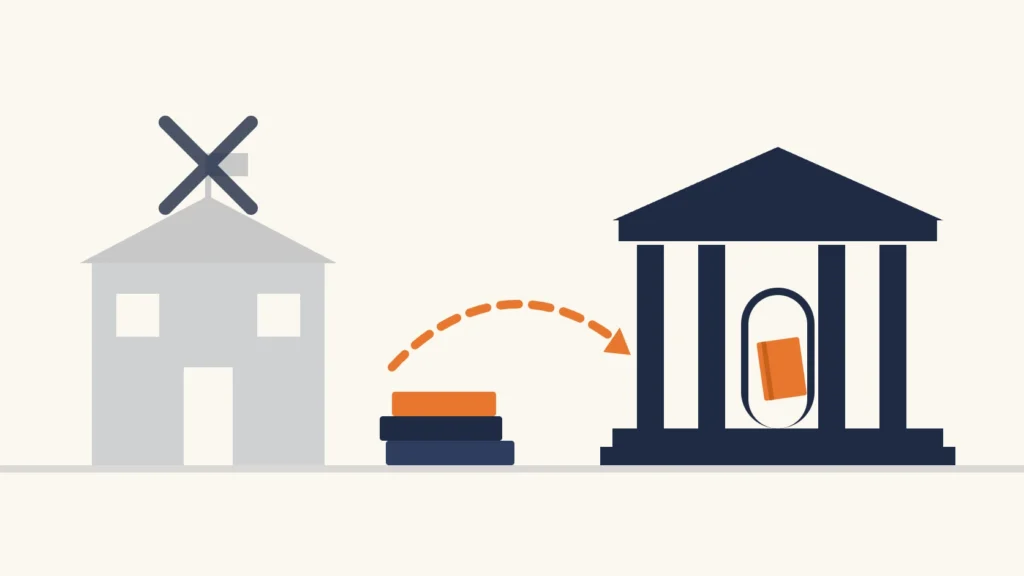
Under Samagra Shiksha, the Ministry of Education’s integrated scheme for school education, government schools get an annual library grant. The scheme page puts it at Rs 5,000 to Rs 20,000, covering schools from Primary to Senior Secondary. The 2018 guidelines give the breakdown: up to Rs 5,000 for a primary school, and up to Rs 20,000 for a composite school running Classes 1 to 12.
Most first-time authors hear that and start planning a school pitch. Read the next line first. The same Ministry page states: “Books published by NCERT, SCERT and other Government publications only may be purchased.”
The detailed guidelines, F.No. 17-3/2018-IS-5 dated 3 October 2018, say the same thing at more length. Books come from indicative lists of NCERT titles (Annexure I) and NBT titles (Annexure II). Beyond those lists, a state may buy from other State Government publishers, including SCERTs. States may form a committee to choose the books. The document does not mention private publishers or independent authors anywhere.
So if you pitch a government school, the library grant is not the money you are pitching for. Whatever the school buys from you comes out of some other budget, usually with a different person deciding. Know that before the meeting, not after it.
Public libraries: the money is central, the buying is state
Public libraries work differently. The Raja Rammohun Roy Library Foundation (RRRLF), under the Ministry of Culture, funds public library development through matching schemes. The Mizoram State Library describes the sharing: 50:50 for the developed states, 60:40 for all other states except the North Eastern States, and 90:10 for the North Eastern States.
Look at what that structure means. Under a matching scheme, RRRLF puts central money next to state money, and the state library authority does the buying. So for a book to reach public libraries, the door you knock on is at the state level, not in Kolkata where RRRLF sits.
What a state route looks like: Tamil Nadu
Tamil Nadu is the clearest example we have found. Its Directorate of Public Libraries runs a Transparent Book Procurement Portal that connects suppliers with public libraries across the state. The portal says it uses subject expert reviews, librarian and user reviews, and reader forum recommendations for purchase decisions.
Look at who can register. The portal’s FAQ lists publishers, publisher cum distributors, and distributors. An individual author is not one of the categories. Publishers may add only books they have published; distributors can add books by others.
That has a practical consequence. If you published under your own imprint, the imprint is what registers. If you published through a service, ask them plainly whether they are registered on portals like this one, and whether your title was ever submitted.
The route that needs no registration
Tamil Nadu also has a public Book Purchase Suggestion form. It asks for the reader’s name and contact details, the district, the name and place of the library, and the title, author and publisher of the book.
That means a reader in Madurai can name your book and name their own branch library. No vendor registration is involved. If you have readers in Tamil Nadu, this is the simplest thing you can ask them to do for you.
Other states: look for the notices
Mizoram takes a different path. The Mizoram State Library has posted notices inviting one sample copy for book purchase under the RRRLF Matching Scheme, sent to the office of the State Librarian in Aizawl. The 2023-24 notice kept submissions open till July 2023, and a notice for 2024-25 followed.
Many states publish nothing you can easily find. That does not mean they buy nothing. It means you have to look: the state library department’s website, its notices page, and the state’s public libraries directorate.
What to do with this
- Do not build a plan around the school library grant. Under Samagra Shiksha it buys NCERT, NBT, SCERT and other government publications.
- Find your state’s public library route. Check whether there is a procurement portal, a sample-copy notice, or a purchase committee.
- Check who is allowed to register. On Tamil Nadu’s portal it is the publisher or distributor, not the author.
- Use reader suggestions where they exist. A request from a named reader for a named branch costs you nothing.
If you never checked your own state library department’s notices, your book was not rejected. It was absent.
Related reading
Planning a print run for libraries? Read why your Word page count is not the number that decides book printing cost. Our publishing packages set out what we handle for you.